
Case Study – Biorefinery Pilot Plant Loop Reactor
April 20, 2026
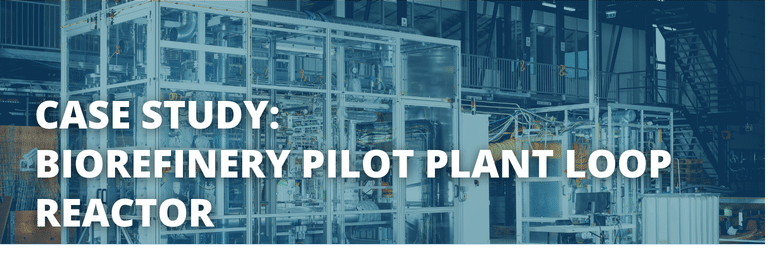
Expanding Capabilities: Biorefinery Pilot Plant Loop Reactor for Sustainable Innovation
Project Overview
The Biorefinery Pilot Plant Loop Reactor was developed for KU Leuven to advance innovative chemical processing of renewable resources (agroforestry residues, recycle streams) into safe and sustainable products. The installation consists of two modular frames, with the added challenge of integrating the new frame into an existing unit from another vendor, requiring seamless communication and careful planning to ensure reliable implementation.
Through precise engineering, the project delivers safe and stable performance, overcoming the technical complexities of designing a reactor that operates under high temperatures and pressures.
Technological Innovation
- Integration with existing infrastructure:
Seamless connection to legacy systems, including software adaption for interoperability, enabling to disentangle and control solubilisation, depolymerisation and stabilisation phenomena. - Double Fixed-bed catalyst configuration:
Enabling catalyst stability and regeneration testing.
Project Objectives
The primary goal was to expand the existing pilot reactor capabilities, supporting the transition from batch to (semi)continuous processing, integrating concepts from both chemical and pulping industries.
A secondary objective was to maintain project timelines without compromising on technical specifications.
Impact & Outlook
This pilot plant enables KU Leuven to investigate flexible reactor concepts that address key challenges in the chemical processing of renewable resources, including solid feedstocks containing inorganics, high oxygen content, elevated reactivity, and an increased risk of catalyst contamination.
Collaboration & Success
The project’s success was driven by strong collaboration between academic expertise, industrial craftsmanship, and strategic innovation programs.