
KU Leuven and Zeton Strengthen EU Resilience through Chemical Innovation
June 25, 2026
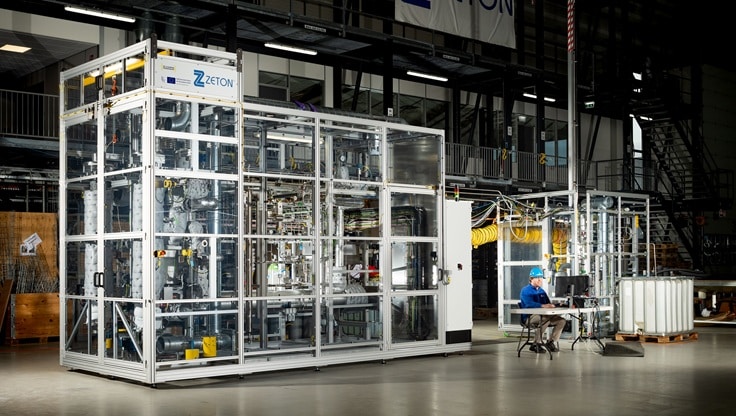
KU Leuven’s Centre for Sustainable Chemistry and Engineering (CSCE) and its Pilot Facility Biocon perform lab & pilot R&D to support a sustainable transition of the chemical industry. Their activities focus on chemical transformation of renewable carbon resources (bio, recyclates, CO2) into safe & sustainable chemicals. To reinforce Europe’s technological resilience, a large support framework was launched under NextGenerationEU, including the Vlaamse Veerkracht (Flemish Resilience) program for open-innovation R&D infrastructure. Based on their track record the Biocon team secured a grant to expand its pilot processing capabilities and strengthen its role as a European hub for industrial-academic collaboration.
As part of the funded roadmap, multiple engineering firms were engaged to deliver different units. One installation presented particular complexity: integrating a new loop reactor system onto an existing 200 liter operational batch reactor, while maintaining full process safety and continuity. Because of the technical sensitivity of this integration, KU Leuven selected Zeton, known for its modular engineering expertise and proven success record in pilot scale chemical installations.
During the engineering phase, the joint team encountered a range of challenges, such as compatibility with legacy control systems and managing operations involving high temperatures and pressures across solids, liquids and gasses. Solutions were developed through close iterative collaboration: KU Leuven conducted targeted experiments, suppliers refined component specifications, and Zeton performed theoretical modelling and practical feasibility assessments. With financial boundaries in mind, both teams invested in getting the design right. Once key risks were mapped and mitigated, detailed engineering, procurement, and construction were launched.
A strict project deadline added further constraints, requiring disciplined follow up, transparent communication, and flexibility from all partners. The installation was delivered on time, successfully passed Site Acceptance Testing (SAT), and is now entering phased operational testing. The new setup enables KU Leuven to investigate flexible reactor concepts that address key challenges in the chemical processing of renewable resources, including solid feedstocks containing inorganics, high oxygen content, elevated reactivity, and an increased risk of catalyst contamination.
This successful partnership demonstrates what is possible when academic expertise, industrial engineering excellence, and public investment align. As KU Leuven and Zeton look ahead to the next wave of innovation programs, the biorefinery loop reactor stands as a concrete example of Flemish resilience translated into technological progress.
Sander van den Bosch, R&D Manager Biocon: pilot facility for sustainable chemistry: “Sustainable chemistry needs bold ideas and reliable engineering — this project delivered both.”