News
November 10, 2025
From Laboratory to Pilot Scale: Advancing CO₂ Fermentation for Sustainable Proteins
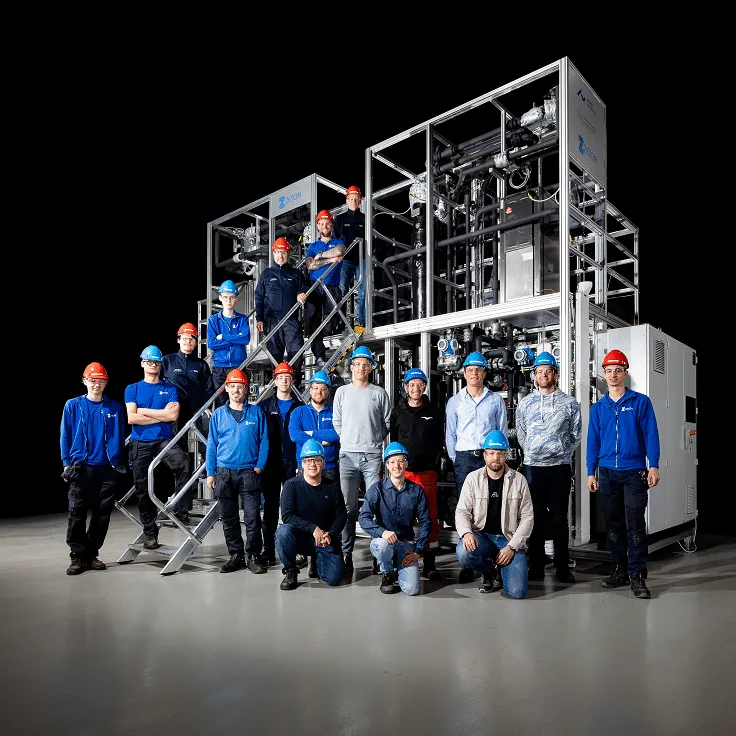
Zeton is pleased to contribute to the development of a novel fermentation pilot plant for the Department of Biological and Chemical Engineering (BCE) at Aarhus University. As part of the joint research program 'CO₂-to-Protein', initiated by BCE and the Novo Nordisk Foundation CO₂ Research Center (CORC), this project represents a meaningful step toward circular and sustainable food production.
Based on a recent scientific breakthrough by Professor Lars Angenent – professor of environmental biotechnology at the University of Tübingen and part-time professor at Aarhus University – the pilot plant enables the biological conversion of surplus CO₂ into protein-rich biomass. This technology opens new possibilities for producing food-grade proteins using renewable inputs.
From Concept to Pilot: CO₂ Fermentation in Practice
The pilot plant uses waste CO₂ as a feedstock for microbial fermentation. Microorganisms convert a mixture of CO₂, hydrogen (H₂), and oxygen (O₂) into high-quality proteins suitable for human consumption. The H₂ and O₂ are generated on-site via electrolysis, making the system fully self-sufficient and aligned with the principles of green chemistry and the circular economy.
This setup allows researchers to study and optimize the fermentation process, with the goal of improving efficiency and preparing the technology for future scale-up.
Engineering for Flexibility and Food Safety
Zeton designed and built the pilot plant with a strong focus on modularity and hygienic operation. The system consists of a main frame with two stacked subframes, allowing for easy transportation and robust set-up.
To meet the stringent requirements of food-safe and microbiological processes, the plant features SIP and CIP features with minimal dead volumes, optimizing cleanability and preventing contamination.
Collaboration and Impact
By combining Aarhus University’s scientific insights with Zeton’s expertise in process design and system integration, together we created a pilot plant that is not only functional, but also designed to allow for easy scale-up towards an industrial-scale process. This collaboration bridges the gap between academic innovation and industrial realization, enabling the quick transition from research to scalable, real-world applications.
We are proud to support this pioneering initiative and look forward to contributing to future developments in sustainable food technology.
Professor Lars Angenent: "The Zeton team is very detail-oriented, and you quickly feel part of the team, they then deliver on what they had promised on time."

Recent posts